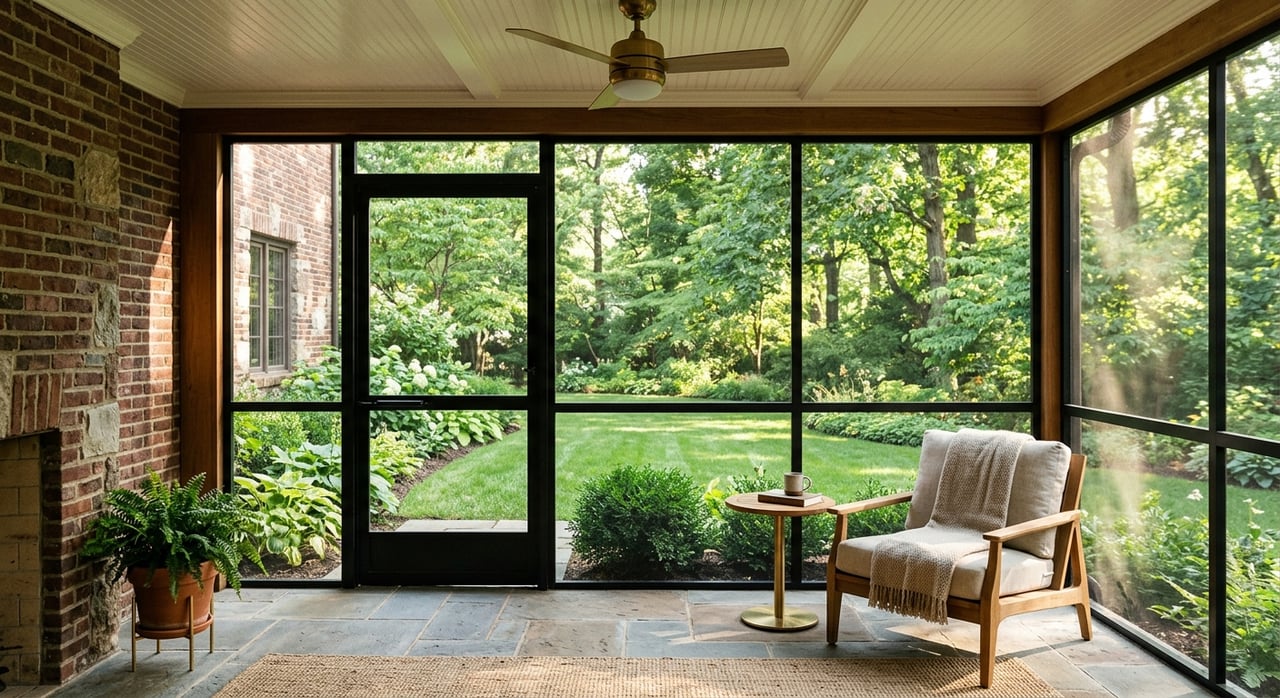
Deerfield vs North Shore: Find the Right Fit for You
May 28, 2026
May 28, 2026
Choosing between Deerfield and the North Shore is not really about picking a “better” town. It is about deciding which daily lifestyle, housing pattern, commute setup, and community feel match the way you want to live. If you are relocating, upsizing, downsizing, or simply trying to narrow your options, this guide will help you compare Deerfield, Lake Forest, Lake Bluff, and Highland Park in a clear, practical way. Let’s dive in.
A lot of buyers begin with price alone, but that usually leads to the wrong conclusion. Deerfield is better understood as a different kind of North Shore option, not just a lower-cost version of Lake Forest or Lake Bluff.
The biggest differences come down to school structure, transit choice, housing character, and how much variety or preservation-minded oversight you want around you. Once you look at those trade-offs, the decision becomes much easier.
Here is the simplest way to frame the choice:
Deerfield Public Schools District 109 serves pre-K through 8 across six schools and 2,721 students. For high school, students move into Township High School District 113, which includes Deerfield High School and Highland Park High School.
For many buyers, that creates a relatively contained path from K-8 into high school within a larger district structure. If you value clarity and a more straightforward feeder pattern, Deerfield stands out.
Lake Forest School District 67 serves K-8 through three elementary schools and Deer Path Middle School. District 115 serves Lake Forest, Lake Bluff, and Knollwood for high school.
This setup offers a coordinated K-8 and high school pathway. Lake Forest High School was named a 2021 National Blue Ribbon School, and the district states that more than 95% of students go on to higher-level education.
Lake Bluff School District 65 is a two-school K-8 district. Most students then attend Lake Forest High School.
That means Lake Bluff offers a smaller-scale elementary and middle school experience, followed by a broader high school network. If you like the idea of a village-sized start with a larger high school option later, Lake Bluff may feel like a strong fit.
North Shore School District 112 serves pre-K through 8 across nine schools in Highland Park, Highwood, and Fort Sheridan. Students then move into Township High School District 113.
Among these four communities, Highland Park has the most district complexity on the elementary and middle school side. For some households, that wider menu is appealing. For others, a simpler structure may feel easier to navigate.
When you compare these towns, it helps to ask:
In general, Deerfield and Lake Bluff offer simpler pathways, Lake Forest offers a coordinated district structure, and Highland Park offers the broadest school network.
Deerfield has Metra stations at Deerfield and Lake Cook Road on the Milwaukee District North line. That gives buyers a straightforward commuter rail setup with two local station options.
For households that want rail access without too many moving parts, Deerfield is easy to understand. It functions as a simpler rail town compared with some neighboring communities.
Lake Forest has access to both the Milwaukee District North and Union Pacific North lines. Highland Park has multiple Union Pacific North stations, including Highland Park, Braeside, and Ravinia Park.
Lake Bluff has one Union Pacific North station. In practical terms, Lake Forest and Highland Park offer the most station choice, while Deerfield and Lake Bluff offer a simpler setup.
Average commute times across these communities are relatively similar. Census QuickFacts shows Lake Forest at 31.3 minutes, Lake Bluff at 28.4 minutes, Deerfield at 27.8 minutes, and Highland Park at 27.5 minutes.
That means your real decision may be less about raw commute time and more about how you prefer to commute. Station location, route choice, and whether your household relies more on rail or car travel will likely matter more.
Using Census owner-occupied home value as a broad comparison point, Lake Forest sits at the top of this group. The median value of owner-occupied housing units is $938,300 in Lake Forest, $776,700 in Lake Bluff, $623,400 in Deerfield, and $607,300 in Highland Park.
This is not the same as current list price or sale price, but it is a useful apples-to-apples way to compare overall price tiers. It shows Deerfield and Highland Park much closer together, with Lake Bluff above them and Lake Forest clearly at the top.
Deerfield’s comprehensive plan says land use is not expected to change significantly and that few undeveloped parcels remain. The village also states that single-family housing remains the basic form of housing.
For buyers, that points to a more familiar suburban housing mix and a relatively stable built environment. If predictability and compatibility matter to you, Deerfield may feel especially comfortable.
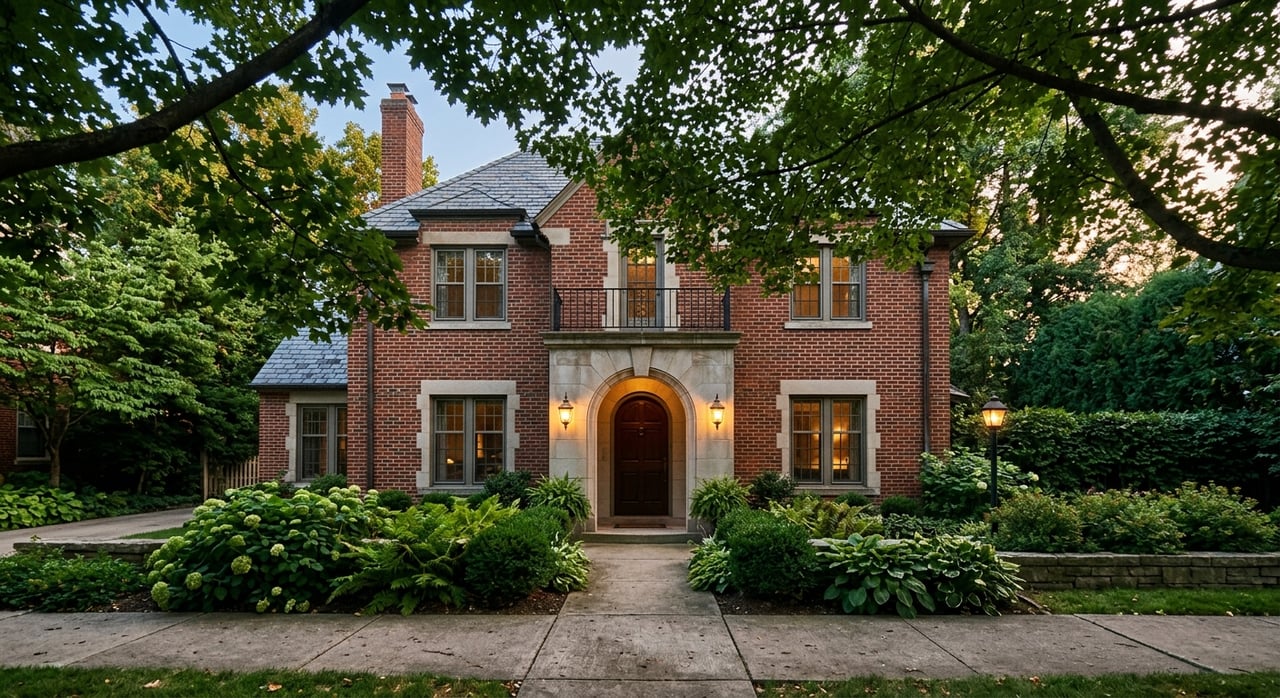
Lake Forest places a strong emphasis on preserving neighborhood character. Its Building Review Board reviews demolitions, new buildings, additions, exterior lighting, landscaping, signs, and site plans outside historic districts.
City planning materials also describe tree-lined streets, preserved open spaces, welcoming neighborhoods, and Market Square as a historic center of community life. If you are drawn to a more formal, preservation-minded setting, Lake Forest stands apart.
Lake Bluff describes itself as historically and architecturally rich. The village maintains a historic-preservation map and uses an incentives-based preservation program with public review for landmark properties and demolitions.
Its downtown plan emphasizes a compact, walkable scale, mature trees, and a historic mix of uses centered around the Village Green, Metra station, library, museum, and retail. Buyers who want a smaller setting with strong architectural identity often respond well to Lake Bluff.
Highland Park adds another layer of variety. The city has a tree-preservation ordinance that requires permits for removal of healthy trees larger than 8 inches in diameter at breast height, and historic work on designated buildings requires approval.
Planning documents also reflect a varied housing pattern, including early 20th-century growth, 1920s Tudor development, and postwar 1950s subdivisions. If you want more housing diversity and a larger, more layered community, Highland Park may offer the broadest range.
If you expect to renovate, expand, or rebuild, local review standards can have a major effect on your timeline and plans. This is one of the most overlooked parts of choosing between Deerfield and the North Shore.
The source material suggests Lake Forest and Lake Bluff are the most preservation-forward in this comparison. Highland Park also includes tree and historic review, while Deerfield appears more focused on scale and land-use compatibility than landmark-style controls.
That distinction matters if you care about additions, exterior changes, landscaping, or teardown potential. It can also shape how quickly you move from idea to permit review.
For buyers who want help evaluating renovation possibilities before making an offer, local experience matters. A team that understands both community character and project planning can help you spot opportunities and avoid surprises.
Deerfield is often the right fit if you want a straightforward suburban experience built around schools, parks, a downtown shopping district, and strong day-to-day functionality. In this group, it reads as the clearest choice for buyers who want simplicity, good train access, and a value profile below Lake Forest and Lake Bluff.
If your goal is to make a confident move without taking on more complexity than you need, Deerfield deserves serious attention.
Lake Forest may be the right fit if you want a polished downtown, preserved open spaces, tree-lined streets, and the strongest value tier in this comparison. It offers a more historically formal feel and a strong sense of place.
For many buyers, the appeal is not just the housing stock. It is the combination of architecture, planning character, and a distinct civic identity.
Lake Bluff tends to appeal to buyers who want a smaller-feeling village with a compact downtown and a close relationship between downtown, the beach, neighborhoods, and the Metra station. Village materials describe it as laid-back and centered on experiences rather than extravagance.
If you are looking for a more intimate North Shore feel, Lake Bluff may offer the strongest match.
Highland Park offers the broadest mix of neighborhood types in this comparison. City materials describe a larger community with Lake Michigan frontage, ravines, Ravinia, nine business districts, and a busy downtown.
If you want more variety in setting, housing, and commercial areas, Highland Park may feel more dynamic than Deerfield or Lake Bluff.
If you are still deciding, use this checklist:
The right answer depends on what matters most in your everyday life. Commute style, renovation plans, school structure, and neighborhood feel usually tell you more than price alone.
If you are weighing Deerfield against Lake Forest, Lake Bluff, or Highland Park, a side-by-side local perspective can make the decision much clearer. Hasselbring Partners offers a thoughtful, low-pressure approach for buyers and relocating families who want grounded guidance across the North Shore.
Stay up to date on the latest real estate trends.
At Hasselbring Partners, we value relationships, both with clients and within the community. Flor's reputation and longstanding presence in the North Shore area attest to our dedication to building trust and delivering exceptional results. Complimented by Tracy's family's history in the community and his extensive career working on notable architectural projects across Chicago, we bring unique insight to the home buying and sales process. We believe in a no-pressure yet timely and effective sales approach, ensuring a positive experience for all involved. Please Join Us!