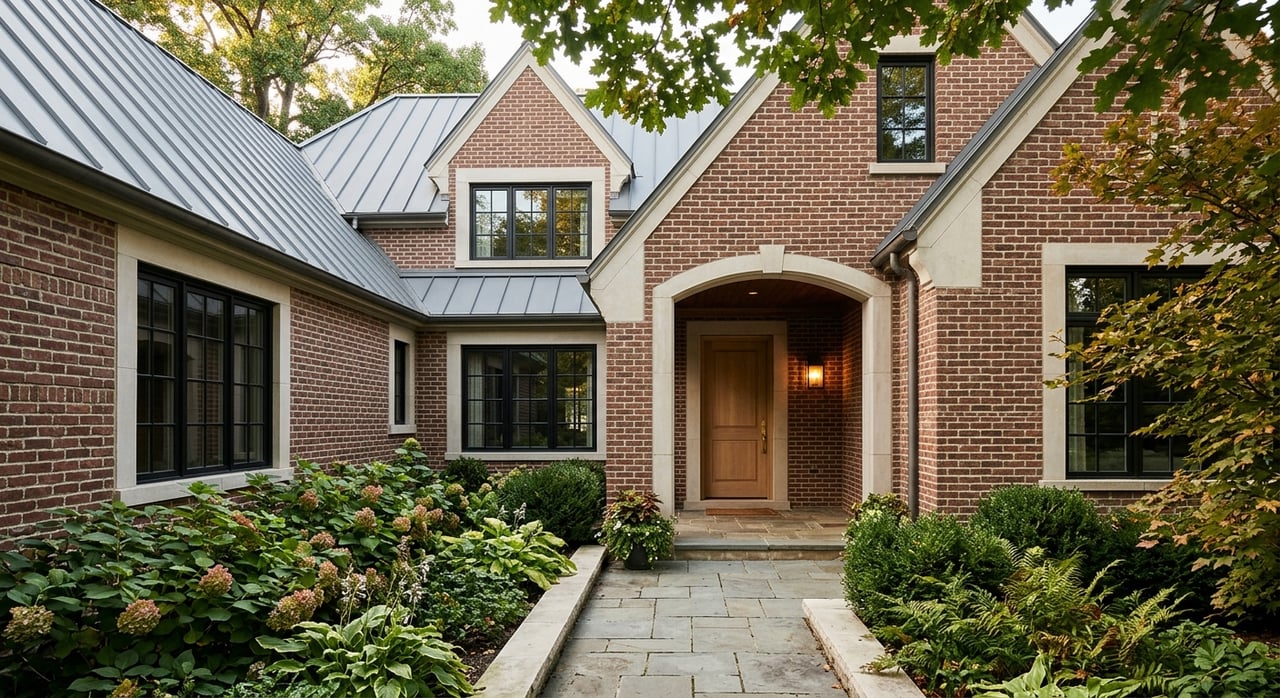
Winnetka Tear-Downs And New Builds: What Buyers Should Know
June 18, 2026
June 18, 2026
If you are eyeing a teardown or new build in Winnetka, it is easy to focus on the house and miss the lot. In this market, the real decision often comes down to zoning, trees, drainage, permit timing, and whether the existing home creates limits or opportunities. If you understand those factors before you buy, you can make a much more confident choice about whether to renovate, expand, or start over. Let’s dive in.
Winnetka has many of the conditions that lead buyers to weigh renovation against rebuilding. According to CMAP’s 2019 to 2023 snapshot, 51.1% of housing units were built before 1940, the median year built was 1938, and 87.2% of units were detached single-family homes.
That matters because older homes often come with layouts, systems, and structural realities that can make major renovation a serious question. In a community with so many detached homes on individual lots, buyers regularly compare the cost and limits of updating an older property against the possibility of building new.
In Winnetka, a property can look like a strong teardown candidate at first glance but still fall short once you review the lot. The Village zoning map includes five single-family residential districts, with minimum lot sizes ranging from 8,400 square feet to 48,000 square feet.
That means the lot size, zoning district, and parcel shape all affect what may be possible. Before you get too far into plans or pricing, those are the first filters to review.
A larger home on paper does not always translate into a larger home in practice. Winnetka’s single-family worksheets cap total impermeable lot coverage at 50% of the lot and roofed or building coverage at 25%.
In R-5, R-4, and R-3 districts, no more than 30% of the required front yard may be covered. The Village also notes that exact gross floor area calculations require a zoning analysis with a plat of survey, so rough online estimates should not be treated as final answers.
Two lots with the same square footage can perform very differently. Front yard conditions, width, depth, and overall shape can change how comfortably a new home, driveway, hardscape, and drainage features fit on the site.
This is one reason buyers should avoid assuming that a neighboring new build automatically predicts what will work on another parcel. In Winnetka, site-specific analysis matters.
Buyers often budget for demolition and construction, but site work can be just as important. In Winnetka, both tree preservation and stormwater rules can materially affect cost, design, and timing.
The Village requires a permit to remove any private tree that is 8 inches or more in diameter at breast height. The Village Forester may inspect the tree and may require replacement trees.
For new single-family construction, tree-protection fencing may also be required before permit issuance. If a lot has mature trees near the proposed building envelope, that can influence the site plan and the overall economics of the project.
Winnetka requires stormwater detention for new homes or when a project increases impermeable lot coverage by more than 25%. That can add engineering, construction, and design complexity to the project.
There is also an ongoing stormwater utility charge based on impervious area. The Village bills $21.83 per ERU per month, with 1 ERU equal to 3,400 square feet of impervious surface.
If a property is near mapped floodplain conditions, your due diligence needs to go deeper. Winnetka states that if a home is within 100 feet of mapped BFE, the applicant must prove adjacent grades are above BFE by at least 0.1 feet.
For new homes with basements, that can mean added requirements such as a FEMA LOMR-F, engineered fill, and compensatory storage. Even if a lot seems attractive from the street, floodplain-related requirements can alter both the plan and the final cost.
A teardown is not simply a construction project. In Winnetka, it is a multi-step municipal process with documentation, review periods, and upfront fees that buyers should factor in early.
For a new single-family build, Winnetka expects a current plat of survey that is not more than five years old, sealed architectural plans, civil engineering plans, and a tree protection plan. In R-1 and R-2, a construction-site parking plan for construction vehicles may also be needed.
The Village also notes that the checklist is not complete without required permit forms and supporting documents. That means early coordination with your design and building team is essential.
A demolition permit is required before demolishing 50% or more of the floor area of a single-family or two-family dwelling, and it also applies to accessory structures. The application requires a survey, demolition schedule, waste-reduction and recycling plan, a list of addresses within 250 feet, and proof of ownership.
Demolition cannot begin until the Village has approved either a new-structure permit or a site-restoration permit. That rule alone can affect how you plan the sequence and timeline of your purchase.
For some Winnetka properties, the most important question is not what you want to build. It is whether the existing home may trigger historic-preservation review.
If the home is historic or architecturally significant, the Historic Preservation Commission can require a Historic and Architectural Impact Study and can impose demolition delay. According to the Village, the process typically runs about 300 to 330 days for significant homes.
For homes not found to be significant, the process generally takes about 30 to 120 days depending on whether a study is required. That is a major difference in timing, and it should be evaluated before you commit to a teardown strategy.
For most single-family buyers, it is helpful to know what is not part of the review path. Winnetka states that single-family homes do not need a Certificate of Appropriateness from the Design Review Board.
That means the key discretionary review issue for most single-family teardown buyers is usually demolition and historic review, not a separate exterior design-board approval.
Even when a lot clears the major zoning and site questions, timing and fees still matter. Winnetka says initial plan review for new homes or additions typically takes about 3 weeks, with revision cycles taking another 7 to 10 business days.
A building permit is valid for 15 months from approval and can be extended for 9 more months with a written request and payment of 50% of the original permit fee. If your project timeline is tight, these details can affect your planning.
Winnetka lists new construction permit fees at $30 per $1,000 of construction cost. The current demolition application for a primary structure also lists a $16,070 fee plus a $5,000 deposit.
Those are meaningful soft costs before construction even starts. Buyers should also model survey work, engineering, tree work, drainage improvements, and any stormwater-related costs on top of the build budget.
Not every older home in Winnetka should be torn down. Renovation can be the better path when the structure is sound, the site is constrained, or the home may face historic-preservation review.
The Village also offers a 20% maximum building-size bonus for historic or architecturally significant homes that are preserved rather than demolished. In the right case, that can make retention more attractive than replacement.
A rebuild often becomes more compelling when the existing house is functionally obsolete and the site can support the desired home after coverage, tree, drainage, and floodplain checks. It can also make sense when a major renovation would effectively become a rebuild-level project anyway.
In some cases, floodplain-related rules may also push a project toward full compliance outcomes if improvements reach substantial-improvement thresholds. That is another reason the early planning phase matters so much.
Before finalizing a purchase, it helps to pressure-test the property from every angle. In Winnetka, a practical checklist includes:
These steps can help you separate a promising opportunity from a costly surprise. In Winnetka, a teardown is never just about the house itself.
The best teardown opportunities in Winnetka are the ones that still make sense after the site has been fully vetted. A strong candidate is not just a dated home on a nice street. It is a property where zoning, lot coverage, tree preservation, drainage, floodplain conditions, historic review risk, and permit costs all support your plan.
If you are comparing renovation, expansion, or a full new build, a careful local review can save you time, money, and frustration. For buyers in the North Shore who want thoughtful guidance and a steady process, Hasselbring Partners can help you evaluate the opportunity with clarity.
Stay up to date on the latest real estate trends.

At Hasselbring Partners, we value relationships, both with clients and within the community. Flor's reputation and longstanding presence in the North Shore area attest to our dedication to building trust and delivering exceptional results. Complimented by Tracy's family's history in the community and his extensive career working on notable architectural projects across Chicago, we bring unique insight to the home buying and sales process. We believe in a no-pressure yet timely and effective sales approach, ensuring a positive experience for all involved. Please Join Us!